Saturday, April 12, 2014

First Chapter of "The Wraith of the Obelisk"- Completely free.


Warnings 
and/or 
Disclaimers.

The subjects, characters, and quite possibly everything inside these pages, is complete and utter fiction.
That being said, I must nonetheless take the opportunity to express certain factual smidgens. 
All the geographical locations, and their respective historical backstories, are as accurate and real, on my behalf, as humanly possible. Few poetic license have been taken. 
The following books, and their respective authors, do not exist; they are make belief, and if you search for them you’ll look like a loon.
  • Encyclopedia Obscura: Truth behind fables.”
  • The Unseen Buenos Aires.”
The same little caution must be added for all newspaper articles, blog entries, and television programs, depicted in the beginning of some chapters.
All stories, fables, urban myths and colorful anecdotes, that spice up this soup, are authentic and honest. They are as palpable and tangible as the taste of fiery peppers and fine onions in a good meal; they are legitimate and give everything a greater zest.
O.K, folks, lets soldier on: aside from all documented figures, pointed out and referenced on these pages, every other character lacks a birth certificate and lives only in my deranged mind; particularly, I hope, Dorian Graig, Lady Man Jaku and the mad Russian.
I bit confusing right?
The only true north, and exercise, I can give the readers in order to figure out: what is true and what is absolute rubbi,sh is to take a minute of their time and investigate that weird detail which stoked their interest.
“The Dyatlov Pass” incident truly did occur. It is still a mystery and, as of 2013, no one has tooled up a comforting explanation for what the Hell happened on that mountain. It is a bizarre story that creeps the living daylights out of anybody who glances over its strange, unsettling, details.
L.J.Gomez.
January, 2014.
Enjoy....

PART I.

“...It was a black spot, of such immeasurable darkness and deep rotted shadows, that it seemed to engulf light and swallow it down into an unyielding void. It was an unnatural monstrosity; painted on the horizon, not sculpted by the hand of God. Inked into place by the Devil’s own water colors. It oozed oily essence and contaminated, with disconcerting ease, the very turbulent waters on which it floated.
Its damnable existence was undeniable. It had a depraved unnaturally and, over all, an angry and baneful disposition. It was corruption above everything else. It cultivated its wrongness out of a fertile sea, that brimmed with continuously poisonous and foul brutality; a sea that disdained your very presence and fought, with all its ugly machinations, to bleed you dry.
It wasn’t a homeward land; the closer you neared and the greater its true face became. It was quite apparent that one would be generous in calling it a: ‘grey sharp barren rock of filth and excrement’. It was, if anything, a dark stygian formation that blighted the Indian ocean. A pox on every horizon. A sting to the lucidity of a sane man. It was a volcanic, desolate, island; a still born monster rejected and vomited from out of the putrid guts of Hades; spewed onto an unsuspecting world. It danced in the waves nestled among whitecaps of billowing froth, that lapped at is sickened and disease based body.
As our boat neared, you could almost picture the image of a great sepulchral beast, fetid and rotting, belly up in the briny soup. Its cadaverous ribs breaking the surface and jotting, like rusty daggers, into the very shores of Heaven. Each loathsome peak was stained with a vile dark color, the earthly blush of dried clay; mirrored blood. Only carrion birds flew between the passages of such acrid pillars; most peeking, and rending, what little meat they could from the execrable land.
It was a monument, erected to honor the only being capable of admiring its cursed geometry; Lucifer himself.
As the skiff broke through the writhing water, and entered a passing inlet, we allowed the final vestiges of the sun to bathed our faces; soon, we would be far too close to this accursed abomination, and the light, as well as the cloudless and blue sky, would take a step behind the land and sink into its shadowy abyss. Two more strokes of our wooden oars was all it took. Night descended, like heavy rain, on top of us; the isle’s penumbra was snuffing every ephemeral ray of glow from the atmosphere. We were now only a stone throws away from its macabre walls. We entered the jagged reefs and prayed to our Gods for safety, as we broke into the island’s bastard enclaves. We headed straight into one of its lurid corridors, fear flowing through our icy veins.  
The heathen rowed deeper into the beast. We were following its veins across its labyrinthian cliffs, pacing ourselves through its slimy waters, searching for the land’s obsidian heart.  
Its carapace was silent and dull, you could catch the alarming clammer of your body’s own blaring anatomy; hear inside your mind a clear voice, as vivid as the speech of a trusted friend, or guardian angel, screaming: ‘... Run! Don’t look back. Run or kill yourself, but do not go any further’. Every organ and muscle, inside of me, twitched with fright. The more you traveled, the greater the pull to dash away; your soul wanting nothing to have with this unholy place.
The island was a land of decay; nothing lived on its soil, nor swam in its waters, its very air was venomous. It was a graveyard and, as such, only Grim Death could venture on its venomous grounds. 
This crossing had been a strain on all of us. Calamities and disasters had been our constant companions. As we neared our prize, and I look out at my benefactor and fall victim, once again, to the same avarice that tied me into this malodorous odyssey, I seethe with anticipation at the juicy prize, I am about to sink my teeth into. We lost two-thirds of our crew, among them woman, children and my own wife and our 3 year old daughter, on this blasted voyage. As the compunction further in-trawls me in, I no longer feel ashamed, or sadden, by my sacrifices. On the contrary, I think, that perhaps, it was too small a prize to pay. Looking back, I would have offered every last beaten creature, and more, to our cruel hardship
My employer, a man of unfathomable pockets, meditates, like a granite statue, on the skiff’s prow; his head always pointing to the north, his north, steadfast and locked on our destination. He is wrapped in those peculiar dark vestments, that cover every inch of his person; the dark ebony material looks alive in the overwhelming twilight. It flows over his body, constantly changing with the cimmerian shades. 
Besides my employer, a constant illness on my sight, but rigid and immovable as a mighty monolith, stands Lady Man Jaku. Her slight form only a masquerade to draw out fools, and food, for her sport. She has grown fat of spirit during our journey. Her blade always shinning with warm crimson blood. Gravity, the churning of the sea, nor any of the various physical manifestations, that now turns my stomach, hold any force over her, and her master. They look as dead as a corpses, and only move, to proclaim life, when necessity dictated it; and always unnaturally fast, and without sparing undo vitality. They would complete whatever task, they had to do, with ruthless efficiency, and immediately fall back into their lethargic state; conserving energy and building up ardor for their next assignment. 
As I get closer to our destination, I look back on the day I sullied my being with my own greed and lust. I think back on the idiots promise, and blood oath, me and my crew swore to this two monsters. I thought, that I could salvage some sort of control in the bargain; relying on her Shinto honor and heritage. Words slipped off my tongue, in a drunken malaise: ‘... You might bring the pot of gold, but I ain’t no ones whipping boy, or lackey... The minute you put one damn foot on my vessel, you forfeit all your rights of privilege, and fall under my command. You may have bought my service, but never my place. In my ship, I, and I alone, make the calls... I am your God, your captain. Do I make myself clear?’ It would take me only 48 hours, after we had left the docks and started out on our 2 month trip, to make me realized that I had been a jester in fate’s court; how they must have laughed at my buffoonery. 
We are meters away from dry soil; only a swimming distance from the acrid shore line. The gloom is oppressive and already we must traverse by the light of our torches, even though high above, past the cliffs, the sky is as clear as water in a crystal glass; illumination recedes from this place. It is shocked by its evil. 
The boat crashes against the land, digging deep into the ashen beach; breaking the gravel and stopping, all its momentum, in one forceful thud. I turn, my light casting sight on the enclosure; chasing shadows away. I am astounded by the fact, that although I did not hear him, my benefactor has already flung himself from the craft and dashed, more than twenty feet inland. Lady Jaku pierces the night with her grey and blue slanted eyes, slips off her kimono and stands completely naked on top of one of the wooden rails; studying her surrounding. A silent predator looking at her new home.
Her form has been sculpted by the Gods themselves. Venus, in all her majesty, would no doubt feel jealous and ashamed by such celestial beauty; the only blemish visible on her skin was a red slash across her back; a whip’s kiss, that had broken an intricate, colorful and immense, tattoo of mysterious scribbles, in two even segments. 
Her skin was as pale as the moon and, like that very celestial body, completely alien to me. Lady Jaku was danger incarnated. She could mesmerize you, with her seductress sway, only to approach closer and gouge out your eyes. On the barge many men had fallen victim to her false demeanor; she was a wolf in sheep’s clothing; a demon passing off as an angel.
She stared back at me, reading me like an open manuscript, registering each word and image that fell from my pages; she knew what I thought of her. She knew, that if given the chance, I would have ended her life. She was not my enemy, only a rather obtuse, and terrifying obstacle, that impeded me from advancing towards my new station in this world. A slight grin perked up, for a second, at the corners of her black painted lips; here for an instant, but lost in a breath’s way. She had spotlighted her emotions; a callous mistake unpardonable by her master. The woman who never let her frailties show; who was suppose to be only a mirror, reflecting the weakness of others but never herself; had defied her Lord, in the exact hour of his renewed apotheosis, and endowed me, with flitting glance at the creature that lurked underneath. She wanted me to bare witness to her smile and let me know that I was but a rodent caught in a tiger’s jaw; a plaything for her, to do with me as she desired. I did not even merit an ounce of fear ,or distain; I was non entity to her. She was a shrike, while I was a cowering worm.
 She straighten her back, broke off her penetrating gaze and leaped, head first, into grimy water. She shot, like a lethal whaling harpoon, into the murky depths of this darken cove. Her posture had betrayed one final thing to me: I had thought, up until now, that my survival had been a fluke of destiny, but as I prepared to enter this accursed land, I deduced, and rightly so, that I am was alive because she had permitted it; not her master, but the witch. I still have a purpose to perform. One I fail to recognize, but one, that I fear, once completed, will ultimately align me into Lady Man Jaku’s crosshairs.
If the woman or girl, for her age was as cryptic as her, was a wolf, than her Lord, my benefactor, was a Dragon; and worst what we came here to seek and afterwards beg from, was, in comparison, a God.
Lady Jaku resurfaced and swam to the shore. She pushed herself out of the water and slid across the sand; coiling against the black grains, dousing her whole body, and hair, in the muck of this putrid wasteland. When she finally did finish, she was covered completely in its embrace with a coat of arid flesh. She looked like a black obsidian statue carved out of nightmares. The only white, that broke from such a frightening bust, were her lamp like eyes; golden red pupils slashed across my soul. 
The woman came up to the side of the barge and withdrew her swords. They were called ‘big- little’ or, in her native tongue, ‘daisho’. They had been adoringly crafted, even the lace, she now tied around her bare hips, had a rich hue to it; I have no doubt that it was truly made from gold filaments and blood soaked treads. She passed her fingers lovingly over them, with care, taking her time to withdraw, only a little, both the long katana and shorter wakizashi; enough for the steel to reflect our torches’s light and wink menacingly at us.
Fear clamped its claws over my heart.
I had an inherent inclination, to pull out my gun, and knife, and kill my final crew man and leave this place; abandon the Japs to their prize and cut my loses. Intuition and common reason, and  told me to flee; but my devilish wants told me otherwise. I ignored my own faculties, and cut down my sixth sense at the neck, as I took my first step unto the black sand. My boot dug into the soil and I stared up at the passage. The mouth of rock, I had to enter through, had reinvigorated my proclivity; I was once again charmed by the bounty that lay ahead.
My inborn impulse for self preservation was drowned out; survival was an immaterial thing, in the face of eternity. Life yearned for death and death feed of life; it was this lesson, on the dynamic flux of existence, that had, in part, pulled me to this graveyard.
Gustav, the cook, left the oars and joined me. The man had been transformed in his new charged. He had passed from feeding the sailors to protecting them. Later, he had discharged that mantel and took the role of an undertaker, sending bodies off the side of Calavera to their watery rest. Now, the Welsh behemoth carried on his shoulders a mighty load: the knowledge of all the burdens, and sacrifices, he had endured in order to become the last survivor, besides me, of this dammed expedition. He too had sold part of his soul.
We both made our way up the culvert towards the mountain that laid to the horizon; Lady Man Jaku was only a couple of steps further inland, her master was already a dot residing into the background. The silence bore on our nerves till it quenched our need to speak; as if that act onto itself would defy some vindictive ghost that sought the smallest transgression, on our part, to torment us. We were entering a land of shades and specters; we had to abide by their rules. Our instincts were the only real weapons we had at our disposal. 
I write now, minutes after those few moments of, what in retrospect one would call, peace. No sooner had we ventured deeper into the beachhead, that a great commotion overtook us; a wild shriek glided down the path our silent benefactor had take; impacting forcefully, like a medieval mace, against our frames. It was a clamor composed of a thousand voices, each more distorted and horrific than the former. 
I fell on my knees clasping my palms over my ears, trying to suffocated such wickedness; protecting my rational senses from such horrors. To my right Gustav flung himself to the ground trying, in vain, to mitigate the onslaught. We both looked like a pair of ostriches; hiding our heads in the sand.
Lady Man Jaku held her ground, oblivious or, perhaps, unperturbed by such malady; the fiend was in her element.
The land had been awaken and, in its sulfuric first breath, it wished to wound us. I felt the sleeping beast stir under this place; a growth that we had come to call upon. Every portion of my being shivered, as fear pricked down my scalp and sweat cascaded down my back.
The howl subsided. It sunk back into a tiny whisper, ever present, that traveled down out marrow.
We all knew what we had come here to do; what wild madness we sought to honor. The wind groaned, while Gustav and I flung back onto our feet. We trenched on, ignoring the pain, defying our strength. We had come to Hell, and now we were about to invite ourselves onto one of its Baron’s dinner table; we were absolute fools.
Without any warning, an almost with a break from this reality, Gustav broke back in arch. He fell on his spine, flat against the ground, and began twisting, in an abnormal way. His bizarre spams traveled down his neck, all the way to his feet. With an outlandish force his muscles contracted and bones started to crack under their strain. The man’s gelatinous form contracted in mighty, but brief, spells of energy. He twisted and erupted in frenzied jerks. His skeleton snapping at its core. His human morphology was transforming before my very eyes. Blood sported out of his mouth. His eyes burst from his skull. Ripples coiled around his arms, traveling up his body. 
There was something inside the poor cook. Something was eating him up from the inside out, traveling in his interior; making roads out of his mangled flesh. Each time it passed it feasted at his flesh, and the meat would cave in. Canyons of empty epidermis assembled all over his skin.
He screamed in pain, and choked on his own vile. I was stupefied, simply frozen in my step, unable to react, let alone help him.
Kitanai buta...’, I heard a voice, sleek with distain, say.
I finally reacted when a spray of arterial blood hit me in the face.
Anata no sakebi to wa shuri kono tochi...’, Lady Man Jaku said as she flung her katana to the side and drops of red flew away from its polished sheath. Gustav’s head laid 2 meters away from his neck. ‘Watashi no ken o yashinau to anata no chi de tochi o kayasu.
I had not even seen her move, let alone decapitate the oath. She slither close to me, her katana still drawn; I feared that I had finally outworn my usefulness. If I tried to unholster my weapons, she would no doubt take offense and make me suffer. I had seen it once, on the ship. One of my sailors had asked her: ‘... I wonder, you Jap whore, is your twat horizontal or vertical... Whatever the case may be, I got a big brown sausage to break it in’, the next thing we all saw was the man’s severed testicles being crushed by the woman's bony fingers; he died in a matter of minutes. I would rather be murdered fast, than allow myself to be played with by this barbarian; I decided to put out no defenses.
She reached me and coasted her blade up my shoulder, right until the hilt hit bone. She pressed herself against my body, the deadly instrument resting inches from my clavicle, its sharp edge only a flick from my throat. We were abreast, one next to the other. She got closer to my cheeks, and in perfect english, one who’s intonation was far better than my own, and with a lovely jasmine perfume, as an aftertaste of her dichotomy, she said: ‘Come little child, we are far away from your boat. This is our territory, here you hold no divinity. Move, or lie next to your final companion... We are your Gods. Your captains. Have I made myself clear?’ She flipped the sword to the other side, withdraw it from me, and slid it back down into its scabbard; she gave me her back and continued her trek.
As I looked with horror at the stained rash of dark scarlet on my jacket’s pad, I find that I was mistaken; I am something to this woman; a rag to wash and clean her weapon. I am useful to her as nothing more than a doily.
I kept my pace, knowing that after today it would all be over; praying that what killed Gustav would however slumber inside my own person, for, as you have read, we are all polluted by them. Iam but a walking dead men waiting for Azrael to catch up.
I mourn for my lost humanity, but rejoice at what lies ahead.

August 26, 1883
Sunda  Strait;
Krakatau, Indonesia.”

The Wraith Of the Obelisk: Publishing date mid- Abril


Back Cover: 

Richard Paxton hates Buenos Aires, Argentina: he absolutely loathes the swampy, reaches down your throat with a hot red coal weather, the extravagant amount pseudo-intellectuals and weird, "over the top", media celebs, the balmy atmosphere of morose sorrow and truly ghastly ghost stories, and, above all, he simply can’t stand the band of roaming fanatical vampires. In 72 hours the world is about to end. The heralds of a pan-dimensional God are about to unleash a storm of biblical proportions and, century after century, they have always been victorious. Doom and mayhem are about to descend on Buenos Aires. 

The fate of the planet lies in the hands of Rick and his new C.I.A. partner/babysitter, and self proclaimed ‘functional sociopath’, Dorian Graig. With the help of a ragtag team of oddballs, these two unlikely partners will wage war against the true inspiration for every undead myth on the planet and its murderous lover, the immortal samurai: Lady ManJaku. They will need to unravel a mystery that began in the 14th century, with the uprising of the Black Plague, continued with the detonation of Krakatau and was responsible for a failed Cold War mission to the Ural Mountains. 

The clock isn't ticking: it's on fire and hungrily engulfing everything in sight.

Waiting for the next Plague: the possibility of an epidemiological Armageddon.


A recent study, performed by the renowned and privately founded Polska Tehnologitsal Instytut Dziejowy Nauk- The Polish Technological Institute of historical sciences- has uncovered a rather startling byproduct of the Black Plague.

A sample from tree bark and sediment found in ice caps, has determined that, during the mid 14th the century, carbon dioxide was at an all time high. The increase level of CO2 in the atmosphere, and the sheer amount of the chemical compound, per square cubic feet, let to a decrease of temperature highs.
This cutback on warm weather, and absolute decline of favorable calefaction, held the world on the cusp of a new never-ending ice age. 
Scholars, are right now, proposing that the causes is all to clear. They believe, that do to the widespread migration of the Black Plague during 1346-53 and, above all, the 80% mortality this great pestilence held, logging and deforestation had been virtually paralyzed.
A triumph for nature, but an unfavorable blowback for mankind.
‘You have to understand’, remarked Doctor Albin Biedrzycki when approached about his comities experimental findings. ‘The powerful outbreak ended up killing, in less than 3 years, an estimated of almost 200 million people. One could even qualify it as a small flash extinction event. It spread like wild fire over Asia and Europe, using the Silk Road as it preferred highway. To this day, we’re certain, that we lack a greater genetic diversity, in our collective biological pool, thanks to this horrible disease. For Epidemiologist, the true turning point of human civilization, the before and after of our development, was the Black Plague. Every branch of our being was severely trimmed during this period. Human evolution simply stopped, arrested in mount of its dead, it was almost a miracle we managed to survive and, finally, prosper from such an apocalypse. As a species we didn’t even have the power, or the numbers, to chop down a couple three. Townships were deserted and landscape took back what was once their’s. Factoring into account that there were so many unmolested plants and growing vegetation now, on Earth, the photosyntetical process flew into overdrive... If you add that to the noxious fumes and billowing plumes of black smoke, we were producing from large funeral pyres, you suddenly have a recipe for an atmospheric conversion; a reversal to a more primitive state. We simply didn’t have the strength to make mother Earth habitable... We were children, in the middle of winter, who couldn’t even lit a fire to save their lives.’

When asked: ‘Why has this ‘ice age’ never repeated itself through the bubonic plague’s history?After all, hasn’t that pandemic illness scourged the human race a number of times?’

‘My dear, there in lies a truly spooky story. This is the sort of saga that has the whole scientific community in a professional crossroads; divided, right in the middle, by their beliefs. As few know, the Great Death, as it was originally called, began in the Gobi Desert. It only spread to Europe, and out of that arid environment because, in a way, it was the fist biological weapon ever deployed. It was the initial, and most deadly, act of germ warfare in the history of mankind. A regimen of Tartar raiders had hemmed in, and blockaded, a Genoese outpost on the outskirts of their territory. They immediately began to die from a sickness they had transported out of the dessert. In order to destroy their enemies, and as a final assault, they commenced to catapult infected soldiers over the fortifications. Ironically, the Italians thanked God for smithing down these heathens; they saw only ludicrous acts of madness and suicide runs in the brutes’s deadly actions. 
When the bandits all perished, the Genoese saddled their horses and began the long trek home; unknowingly spreading everywhere, the illness that was cooking inside their bodies. The merchant vein, known as ‘The Silk Road’, rapidly advanced the transmission of the plague; dispersing it affliction with absolute ease.
Now, here is were scientist bifurcate, objectively we have never been able to actually study that monster that came out of the dusty Gobi. We have taken only samples, and dried up fragments, be not a life specimen. What we have been able to put under a microscope, and freshly dissect, are later strains of that demon. We are now, almost, 100% certain that a small bacterium called: Yersinia pestis, a tiny rod-shaped organism, is the causes for the Bubonic Plague. It’s an agent that latched itself to the intestinal track of other animals; primarily blood sucking flees. 
So there, the end... Right? Unfortunately, no. Like I said, we know the culprit of the Bubonic, but not of The Black Plague. You see, there in lies the riddle that has, and mind you I know its in bad taste this next addendum, plagued us. Is the Bubonic Plague the same phenomenon that killed almost 2/3 of civilization in those ghastly 3 years? 
It only has a 60% mortality rate, compared to the 80%, that I previously mentioned. The bubos, or black boils, that so condemned one of its victims to death, were not limited, in the Black Plague, to the groin area. The acute vomiting and fever, in overall, is also quite lesser in the Bubonic. It looks like a duck, and sound like one, but it might very well be a swan. A large portion of us hypothesize that the original outbreak was a different kind of biological entity; a different virulent.
Some scientist believe that those descriptions are only an exaggeration, in part, of the only highly unreliable text and reports from those ancient days. A lesser branch considers that the Great Malady was, in itself, a mixture of Bubonic with a viral hemorrhagic fever, something along the lines of Ebola. The Haensch study, which surveyed and investigated the D.N.A. evidence of mass burial sites, has determined that: ‘Y. Pestis, was responsible... But a variant that may no longer exist’.
As you can see we are all of different opinions.
Worst, its that last study,which I just quoted, and similar theories, that cloud the sunshine and produce the C.D.C’.s nightmare scenario. It is all summed up in one three later word, inserted inside a conclusion of The Haensch paper; those tiny units of language send a shiver of dread down everyone’s spine. Let’s reread that last sentence: ‘... that MAY no longer exist’.
If you stop to think about it. If you begin to contemplate such terms as hibernation, cryogenics, mutation, dormant, manipulations, that MAY suddenly ruins your outlook and freezes your blood.

Excerpt: The Wraith of The Obelisk- L.J. Gomez.

Unseen Buenos Aires: The Obelisk.


Misoneism, was first used in 1886, and it is defined, by the Merriam- Webster’s dictionary, as a noun that means: ‘a hatred, fear, or intolerance of innovation or change.’
After its confronted by fluctuations in its environment, there are three possible states of attitude that the human psyche can derive at: Acceptance, and quite possibly joy; the complete opposite of that first happy spectrum, Hate; or the third, to everyones’s chagrin, acquiescence with a bitter taste. That third emotional stop, is, to many, the worst outcome; it’s defeat in the face of the future. Its yielding under something repulsive and learning, as they say, ‘to live with it.’
There is nothing as unfavorable as to be stomped by progress’s black jackboots; its horrid march bearing all its, considerable, weight on your back.
Sometimes, when people first witness modifications to their ecosystem, they see everything with a murderous prejudice. Everything is uncouth, gaudy, ill-bred and simply, as Argentinian’s are so fund of pronouncing: grasa.
When the Eiffel Tower was being planned, by the Parisian government, as a memorial to celebrate the centennial of the French Revolution, public opinion towards it was grimily low. Alexandre Duma even published, and signed, the following declaration: ‘we protest with all our strength the useless and monstrous Eiffel Tower. The Eiffel Tower is without doubt the dishonor of Paris. Everyone feels it, everyone says it, everyone is profoundly saddened by it.’
Another primer example is Neuschwanstein, the fairy tale inspired fortress that was later used as a blueprint for Disney’s Cinderella Castle. For over a century nestled in a looming pool of peaks inside the German Alps, its presence was heavily repudiated. During its construction, its creator: King Ludwig II’s, sanity, was called into question; if he hadn’t died, in 1886, the authorities would have stolen the throne, destroyed the citadel and, just so he couldn’t build another monstrosity, would have had him declared legally insane. 
The Guggenheim Museum, in New York, cemented such colorful reactions as: ‘A toilet bowl’, ‘A hangar for flying saucers’, ‘a gigantic snail shell’ and ‘Wright’s joke on New York’.
Even St. Paul’s Cathedral could not escape initial outcries, and was referred to as: ‘awful, pompous and artificial’, when its was first viewed after its completion.
In the end, most where reclaimed as state seals and, after a while, do in part to the economic boom they brought to the tourist trade, and regional merchants, they were ultimately embraced, in spite of the fiery outburst they first fueled; money ended up calming the beast and winning over aestheticism.
The postcard imagery of Buenos Aires, that monument that has given it a worldwide logo, The Obelisk, was almost burned on completion because of its perverse and burlesque mockery to the Capital’s refined taste.
Built on the intersection of The 9 de Julio and Corrientes Avenue, in the place geographically referred to as ‘the exact heart of the country’. The first impression devised by the populace was that of a bad omen; they saw a giant white dagger stabbing the nation’s beating cardiac muscle.

The iconic monument was build in order to commemorate the fourth centenary of the city’s foundation. Its construction began in March of 1936 and by May of that same year, the monolith was inaugurated. In less than 31 days, 157 workers erected the mighty plinth over the demolished St. Nicholas of Bari church; the historical house that first hoisted the official Argentine flag. 
Retailers, shopkeepers, tycoons, and citizens, were relocated in order to facilitate its rapid built. Markets, stores, banks, homes and historical sights were decimated, in less than a week, to widen the arterial avenue and the park: Republic Plaza, for the colossal white Olaen stone and concrete behemoth. 
Protests and marches soon followed its launch. Graffiti and defilement was an everyday occurrences. Elderly ladies, and gentile men, would glare at it with ‘the evil eye’ and spit on its foundation. The place was thought to be cursed by the souls and ghost of dead workers. Lightning would continually strike the metal rod, situated on the apex of the beast, giving it a Galvanic air, reminiscent of gothic visuals.
Phrases like: ‘Giant pincushion’, ‘It’s only compensation for the president’s tiny prick’, ‘Plasta de mierda’, ‘armatoste espantosos’, ‘We’re not even creative... We stole it from the Yanks!’, constantly braced themselves against the architect’s, Alberto Prebisch, modern masterpiece. 
After a few years all the fuzz was forgotten. The podium not only heighten the city’s cosmopolitan perfume, broadcasting to the world its fevered night life, and claiming it had nothing to envy from Times Square and Picadilly Circus, but it also became the beloved symbol of Buenos Aires. The picture and idol that would forever be conjured up inside the public’s mind; one part of the vast representation of Porteño scenery and stereotypical ideals. 
Like all things, some, even to this day, continue to repudiate it. Nonetheless, there can be no quarrel to the fact that, like Gardel’s tangoed silhouette, like the celestial blue and white of the country’s flag and like the multicolored houses of the Boca neighborhood, the Obelisk has become a stable and a hallmark of Argentina. It grew into the emblem for vacationing travelers and the main magnet for foreign currency.
Once again a clear example that its easier to adapt if greased by green dollar bills.

Excerpt: The Wraith of The Obelisk- L.J. Gomez.

The Vampire epidemic of the 18 hundreds... the other witch trials of North America.


When we let our minds race back to the early New England settlements of the late 17th century, and atrocities committed during this time, we usually imagine the famous Salem’s Witch trials.
During those dark times in the states history, the belief in and fear of all manner of creatures was high.
Almost 200 years after, the last suppose witch was hanged, the fertile ground of Connecticut, cultivated in blood and superstition, burgeoned a new preternatural terror: The Vampire Epidemic of 17th and 18th hundreds.

An outbreak of consumption, what is modernly called tuberculosis, besieged the upper Eastern coast of the United Sates. Whole families were decimated within weeks and townships brought to ruins in the wake of such devastating darkness.
 A populace held in the grip of terror, fell back on arcane assumptions and, remembering old world legends, blamed a vampire for the spread of the plague. So began an unrelenting and systematical exhumation, and beheading, of hundreds of recently interred bodies.
Anthropologist, scientists and forensic specialist have taken, in contemporary times, a particular interest in the phenomenon. Specially with in the borders of the Jewett City Cemetery and the case of Mercy Brown; a small girl who perished from the ravages of tuberculosis. She was said to have haunted and passed on the disease to the rest of her kin. One by one her family succumbed to the malady, and fell to death’s hand. Mercy’s body was disentombed, found to be in a perfect un-corpsefied state and put to the torch.

Like the little Brown girl, rumors of dozen of such cases flooded the primitive media during those bewildering times.
The American’s imported the European custom of a vampire burial. Some cadavers were stabbed through the chest with an iron or wooden rod; others were decapitated and their respective heads reburied, away from the neck, close to the buttocks or the feet; and those, that were already showing any of the numerous signs of vampiric tendencies, were torched until their bones turned to ashes.

Excerpt: The Wraith of The Obelisk- L.J. Gomez.

The Family of Vampire Hunters


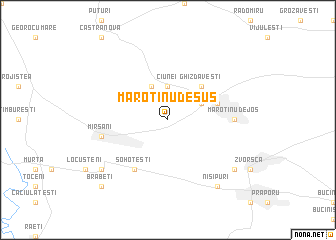
In 2004, in the village of Marotinu de Sus, in the outskirts of Eastern Europe, a family of vampire hunters were arrested by the police of Craiova for ‘disturbing the peace of the dead.’

They were imprisoned and sentenced to pay liability damages to the household of a 76 year old Romanian peasant named Petre Toma; a punishment that lacked the necessary contrition that the law required, primarily because the hunters, who were prosecuted, were said family. 
Their old grandfather had died the previous year, before Christmas, and had since been spotted, walking about the once peaceful town.
His brother in law became the leader of a posse that dug up the body, made an incision in Petre’s chest, and tore out the heart. They later burned the corpse and mixed in the leftover ashes with holy water. They, as was customary, drank this concoction with the all decease’s clan members; a folk remedy and practice, fabricated by ancient witches, that would allow the soul of the afflicted undead to finally ascend to Heaven.
From that day on, there has been a law in effect to contradict, and battle, such barbaric procedures. Nonetheless, in the nearby village of Amarastii de Sus, its people have fallen into the ritual of driving fire-hardened stake through the heart of the dead, in the middle of the funereal rites, as a preventive measure.

Excerpt: The Wraith of The Obelisk- L.J. Gomez.

Unseen Buenos Aires: The S.I.D.E and C.I.A, scandal of the 90s


Formed in 1945, during Juan Domingo Perón’s first presidency, and established by Executive Decree 337/46- the C.I.D.E (State Intelligence Coordination), later named S.I.D.E, had the primary task of acting as the national intelligence agency. It was initially run by civilian personnel in Argentina.
Their mission purview extended to foreign and national affairs.
In the same exact manner of the C.I.A., and almost all the world’s intelligence organizations, this department has been the subject of a myriad of horrible debacles. 
From the triple failed, and publicly laundered, assassination attempts on the lives Isabel Allende, Rodolfo Matarollo and Enrique Erro in Paris, during the de-facto military government in Argentina; to a well publicized, and highly anecdotal, Operation code named ‘Marilyn’- in which blond shapely women infiltrated the beds of Cuban diplomats, and official delegates that island, during their festive nights out at ‘Café la Biela’ in the neighborhood of Recoleta; a small ‘faux pas’, that ultimately won them nothing and ended up costing a handful of female agents, who defected to Castro’s paradise. - and, finally, and quite possibly the worst to the C.I.A.’s consternation, the Ross Newland scandal of January 2001.

Labeled as ‘a violation of game rules’ by the international intelligence community, this particular fisticuff marked a considerable breakdown between the CIA and the SIDE’s partnership; a lucrative collaboration, that had grown extensively warm during Carlos Menem’s administration, had suddenly been soiled by American distrust. So much so, that CIA’s station was, as a consequence, relocated from Buenos Aires to the neighboring capital of Uruguay. 
In the beginning of 2001, Página 12 -an Argentine newspaper- published an article with a detailed description of personal facts and photos of Ross Newland: CIA station Chief in Buenos Aires, and the primary candidate for head of the Latin American division. Said article also contained classified reports concerning the association between the U.S. and Argentina’s spy machine.
Argentina, in the beginning of the 21st century, had two beneficial tools for would-be criminals, and potential threats, to The United States interest; both abroad and domestic. 
1: An open door policy for Aliens; an almost non-existing set of requirements for obtaining legal immigrant status. A process that required almost no background checks. In the end Argentinian citizenship was assessable in a quick-end, fluent manner to everyone who so desired it.
2: Argentina, and it’s citizens, had a treaty with the United States: In which both of its populace could visit each other, without the need of a tourist visa; a program known as ‘visa waiver.’ 
As such, given those two bureaucratic loopholes, Argentina had become the staging ground for all types of fiends, that wished to enter U.S. territory, and operate outside the margins of the law.
The CIA, under Newland’s direction, had been pressuring its Argentinian counter part, SIDE, to investigate an enterprise composed from the likes of the Russian Mafia and ex-KGB agents, that freely operated within Argentina’s territory. They were conducting a smuggling ring of epic proportions.

A few months before Newland had accused the SIDE of following/tracking him and his agents, as well as performing unsanctioned wiretaps and audio surveillance- a peculiar problem that was also shared, and admonished, by the Israeli Mossad and the German’s BND.
By thiat point, the relation was waiting for the last straw to break the camel’s back.
A melting pot of conflicts had been stirred, and it all came to a boil, when the CIA discovered: that not only was the SIDE not investigating, or making a governmental issue, of what the American’s called ‘the Russian problem’, but it was in actuality helping the enemy newcomers insert themselves in the local market by selling them priceless information.
The famous New Year article only served to inflame the American Agency's mood. It was seen as a publicity stunt; orchestrated to not only discredit the CIA, but also reveal hidden human assets, agents, in the war against crime. 
The leak was later traced to, the then head of the Secretariat’s counter-intelligence service, retired Major Alejandro Broussoun. An ex-military service men from the Engineers Corps, and a one-time follower of the ultra-nationalist right wing ‘Carapintadas’ organization.
It was a ploy devised, by Brousson, to obfuscate the field and allow the, equally beneficial, financial relationship between the Russians and The SIDE to continue un-molested; it was interpreted as a drowning man’s feeble last stroke.
The scandal ended up putting a dark blemish between both agencies’s kinship and alliances. Major Broussoun was expelled as a peace offering, but the stain had already permeated the fabric; the damage was done.
From that year on: The CIA and the SIDE became two bullies in a schoolyard. They tolerated, feared and understood the necessity for each other, but, although they were on the same side of the fence, they couldn’t stomach their counterpart; there is nothing crueler than seeings one’s self in the mirror and wishing to punch the reflection

Excerpt: The Wraith of The Obelisk- L.J. Gomez.

Unseen Buenos Aires: Belek, The vampire dwarf.


In Buenos Aires, Argentina, during the 70‘s-mid Military autocratic period- a folksy maxim was coined: ‘When the sun went down the militia, the guerrilla, the cops, and the criminals were the only true owners of the street.’ By the end of that cycle, a fifth component was added to the aforementioned list:
‘When the sun went down the militia, the guerrilla, the cops, the criminals and Belek the vampire, were the only owners of the street.’
Like all great vampires stories, Belek’s origin takes a page from the Dracula handbook. A native of the Carpathian mountains, home of the Count’s imposing castle, he traveled to Argentina on the backs of circus animals. He was, in a way, the eternal flea stuck to the underbelly of his betters. With a diminutive figure, the dwarf named Kirki, who would later on grow famous as Belek, arrived on the coast’s of Buenos Aires as a clown for the Russian ‘Circus employed at Czars.”’

He was one of the new acts to be incorporate into the mad troupe of gymnasts, arial trapeze, jesters, ringmasters and, all around, entertainers. Know for his impressive agility and mysterious demeanor, he soon became a stable member of the show and, more importantly, of the heavily knitted  the big top family.
Then, during a short period of time, the manager, Boris Loff, who had primitive notions of medicinal procedures, but nonetheless liked to practice his hobby as the circus’s doctor, began to see a pattern emerge concerning a series of animal fatalities. Up to this point, such deaths, were attributed to common ailments. It was Boris’s fervent believe that the creature were being drained of their bodily juices and, that somehow, the case of exsanguination was not internal but external. 
With the help of the Bearded Lady and The Bullet Man, he hatched a trap to ensnare the culprit. One night they were ambuscaded by a wild desperate shriek, that blossomed from the strange dwarf’s alcove. They smashed themselves through the wooden barrier and surprised Kirki, as he nursed blood from a small mammal's jugular vein; his victim was Vera, the cute South American Titi monkey, that had become Boris’s pet during the trip. 
Instantly awestruck and flabbergasted, by such a gruesome sight, Kirki was banished from the circus’s comfort. No official report was ever filed, do primarily to the bands’s misgivings, that such a obscene and scandalous affaire would only serve to blackball their proud socialist paradise, specially if left in the hands of the capitalist bourgeois media.
Kirki, changed his name to Belek and moved into the peripheral neighborhood of Flores. All associations and ties, with his former profession were severed. The small neighbor tried his best to conceal his vampiric tastes towards his new acquaintances.
But, after a while, his bloodthirsty propensity could not be hidden, nor denied. 
His addiction won the better of him and the streets, that once were littered by stray dogs and cats, started feeling lonely. The bent, in the normal order of the environment, caught the public's eye, and speculation started running rampant through the blocks. Then, almost as a final nail that ascertain the incendiary ideas that frightened the populace, the cadavers started appearing and pilling up. No longer were wild ideas liberally forming in the imagination, but they were, in turn, slowly limping their way out from that mind prison. All manner of beasts were discovered, their throats licked clean, their bodies completely empty. 
The local constabulary had not choice, but to raise the alarm and open an investigation. It was only a question of time before Belek’s dirty secrets came to light and, as it seemed, the clock waited for no one. 
Soon his culpability was assured and the evidence riled against him. Like a cornered predator, the brute latched out in desperation and commenced attacking bystanders. A mob of vigilantes was finally amassed to flush out the scoundrel. When they arrived at the dwarf’s dilapidated house, they found the structured littered with the fetid corpses of dozens of small critters; their murderer had long taken leave of his homely abbatoir.
The whereabouts of Belek remain a mystery, although locals swear he sought refuge, and is still hiding, in one of the many mausoleums that day inside “Flores’s Grand Cemetery.” 

Elderly and young alike, to this day, continue to adorn their windows and openings with long garlic strings. A preventive measure against the mad vampire dwarf that still haunts their nights.

Excerpt: The Wraith of The Obelisk- L.J. Gomez.

Jure Grando, the Vampire of 1656.


One of the first documented case of a vampire, whose existence flows away from fiction, is that of the Croatian peasant Jure Grando. During 16 years after his death, in 1656, this hellion would terrorize his birth-town of Kringa. 

The villagers would witness the revenant in alley corners and ambulating across night streaked brickstone. He would knock on the doors of houses, whose occupants would later on die within days of some strange disorder. Grando would appear, at least once a month, and sexually assault his widow.
It was only when his coffin was disinter and, although he had been dead for so long, his perfectly preserved body savagely beheaded, that the terror finally stopped. 
An account of the exorcism and subsequent banishment states that Jure’s face sported a devilish, grin while Father Giorgio, the leader of a band of hunters, shouted: “Look, strigon, there is Jesus Christ who saved us from Hell and died for us. And you, strigon, you cannot have peace!

Excerpt: The Wraith of The Obelisk- L.J. Gomez.

Strigoi; the real Vampires.


What we, nowadays, refer to as a Vampire is nothing more than a common misconception on our part, of the real myth. The undead, specifically the sort that preys on blood, have existed in every nation, region, zone or small hamlet, on the planet. They have infested our imaginations in every conceivable language.
After a time, the image of a monster suckling on someone’s blood was so gruesome and shudder-some that it was easily adapted into the fictional makeup of every conceivable dweller of the night. Every shadowy creature suddenly developed a certain taste for human blood. As such, the prime characteristic that single-out the vampiric nature of Lamashtu, had become a fashionable tendency.
From the Dacians, an Indo-European populace, located in the area in and around the Carpathian Mountains and west of the Black Sea, the mythology of the undead, rising from the grave, with the propensity for draining victims of their vitality, was first laid to script.
The Romanian Vampire, or the creature we normally cast in the role, was originally called: Strigoi. Unlike the swathe debonaire aristocrat or enchanting seductress we normally associate with the stereotype, these beings were only a step above a shambling pile of fetid meat. They resembled more the modern depiction of the Zombie, than the pale sexual beings made famous by Anne Rice.  
The Strigoi would surge up from his grave, stumble into town, bring misery, death and illness in his passing wake, only to return to his abode moments before sunrise.

Every ache and ailment that befell on the community, from an upsurge of the Black Plague, to a string of killings, was laid at the Strigoi’s feet. If the crops did not meet the yearly standard, or the weather would not clear, there was no doubt in the peasant’s mind that a powerful Strigoi was in their midst. 
Through out Europe and part Eurasia, particularly in the middle ages, there was an epidemic outbreak of tales concerning these hellions. Specially, if you consider that fact that, according to scholars of that ignorant Era, ‘strigoism’ was a frequent and proven scientific affliction.
According to many naturalists, one was destined to become an accursed if he or she displayed any of the following attributes:
To have been the 7th child of the same sex in a family.
Have been bitten by a werewolf or another Strigoi.
Having been born a redhead.
Lead a life of sin.
Die without being married, or by execution, or by suicide, or cursed.
Having been born with a caul; a piece of discardable membrane or placenta over the head.
Court the Devil, or his minions, in any way.
If your corpse was jumped over by an animal, in the space of time before your burial.
Having wounds that had not been treated with boiling water.
Some cultures believed that you had to be buried upside down, or with scythe or sickle, to prevent such a fate.
And the list is quite interminable; over a 100 criteria could transform you into a monster.
It is no wonder that vampires were such a common occurrence during our less enlightened periods.

Excerpt: The Wraith of The Obelisk- L.J. Gomez.

Unseen Buenos Aires- Costanera's Reservito and The Hounds of the Baskerville


Every city, from high rise metropolis to oak build suburbs, should have their own particular preternatural mascot; their endemic cryptozoological enigma. That peculiarity that gives the shiny sidewalk, and smell of urban habitation, an air of engrossing mystery; a touch of: ‘The what if?’ Scotland has Nessie, New Jersey is home to the Devil, Puerto Rico to the Chupacabra, Virginia to the Mothman, and so forth. The list is interminable.
Continuing with this tradition, Buenos Aires, one of the largest megalopolis in the world, holds its own little pet: ‘Reservito.’
These beastial large dogs, with traits similar to the now extinct Thylacine or Tasmanian Tiger, have, supposedly, carved out their habitat out of the densely populated, and nouveau riche, coast of the city. Particularly in the north and south reserve that encapsulate, at each peaked end, the 15km scenic boardwalk, suitably named: ‘La Costanera.’

Their carnivorous nature for speculation, plus eye witness accounts have given fame to their prodigious and feral attitude towards man, have daily haunted the populated local; using the falling sun, and the coming of twilight, as the preferred occasion for their wild hunts. They have been seen stalking their prey along the switchbacks of the river’s bend, or among the high brown grasslands of the protected environmental park, and even on rare occasions they have expanded their territory to the shadowed streets, of steel and glass platted juggernaut buildings, that loom close to the marshy areas.
Their existence, or for that matter, the existence of a colony of such creature, has largely passed unnoticed by local officials. They simply consign it the necessary level of skepticism require to blot out the problem. So far its, very dubious, presence has largely been observed by transients, vagabonds, joggers, environmentalist and sightseers. 
One of the leading characteristics and supernatural myths behind its existence is the theory that ‘Reservito’ is not a carnal animal, but a specter of sorts. A ghost that harasses the Buenos Aires coastline. This spiritual undertone would, in part, solve the dilemma encompassing its uncanny prowess to evaporate into thin air; his, almost, metaphysical ability to blend into the background and evade detection. 

Still, another trait that lends credence to this idea, is the ominous deviltry that arrises as a consequence of its manifestation. To those who bare witness to Reservito’s figure, an onslaught of misfortune, even death, befalls on them a few days later. Its appearance is highly regarded as portent of ill-regard and calamity. A motif that is evident and constantly repeated in every culture and mythological system to date. 
The stereotype of a figure, or ghost, normally a black canine; a hellhound, that scavenges crossroads, or places of executions, or ancient pathways for dammed souls, has existed since primordial times.
Normally these creatures are associated with some greater evil. They are though of as servants, or familiars, of witches, vampires and even Beelzebub himself. On foggy moors, smoked soaked graveyards, or lightning drenched beaches, their vile apparition is a constant heartache on troubled citizens.
A few examples of Reservito in the historical records are: Black Shuck from Suffolk, The Gurt Dog in Somerset, The Black Dog of Hanging Hills, Cŵn Annwn of Wales, Tibiciena of the Canary Islands, The Bogey Beast of Lancashire, Nahaul of Mexico, El Perro Negro and Lobizon of Paraguay, and countless others.
Perhaps, the most famous example of this sort of paranormal anomaly, or superstitious construct and archetypical depiction, is the fable that inspired one of the most beloved novels of our time. On the 5th of July, 1677, in Devon, a county of England, a diabolically evil man, maybe even the un-triad killer of his own wife, Squire Richard Cabell, befell to the reaper’s scythe. Legends, and the town’s gossip mill, would have travelers belief that he had bargained his soul to Satan for immortality. On the first nigh of his eternal rest a pack of wild black dogs were spotted baying across the moor to howl at his sepulcher and claw endlessly at his tomb. Villagers have, to this day, seen this foul man stalk the woods while leading a troop of hungry redeye mastiffs; hunting for lost game and weary tourists.
Devon superstition claims that each one of the specter’s dogs is a baby who died before being baptize. They are misplaced phantoms who were never cleansed of the original sin. They have taken to calling the beasts: Yeth Hounds. 
A writer, by the name of Sir. Arthur Conan Doyle, was terrified when he heard such a grim tale and, like most artists, he decided to purge himself of the stain through his pen. The Cathartic masterpiece would become the classic Sherlock Holme’s story: “The Hounds of the Baskervilles.”

A clear example of unfounded fears, and cult beliefs, swaying the world in their tune.
In Buenos Aires, it has become a pastime for fanatics of the macabre to explore the littoral and shoreline for the elusive Reservito; never thinking, for once, what curse they may awaken, if their dream of sighting him was ever granted.

Excerpt: The Wraith of The Obelisk- L.J. Gomez.

The Evil Dead Hand and the evolution of the Undead.


... Since the first time humanity saw the ravages of death ,speculation regarding the undead have flourished. 
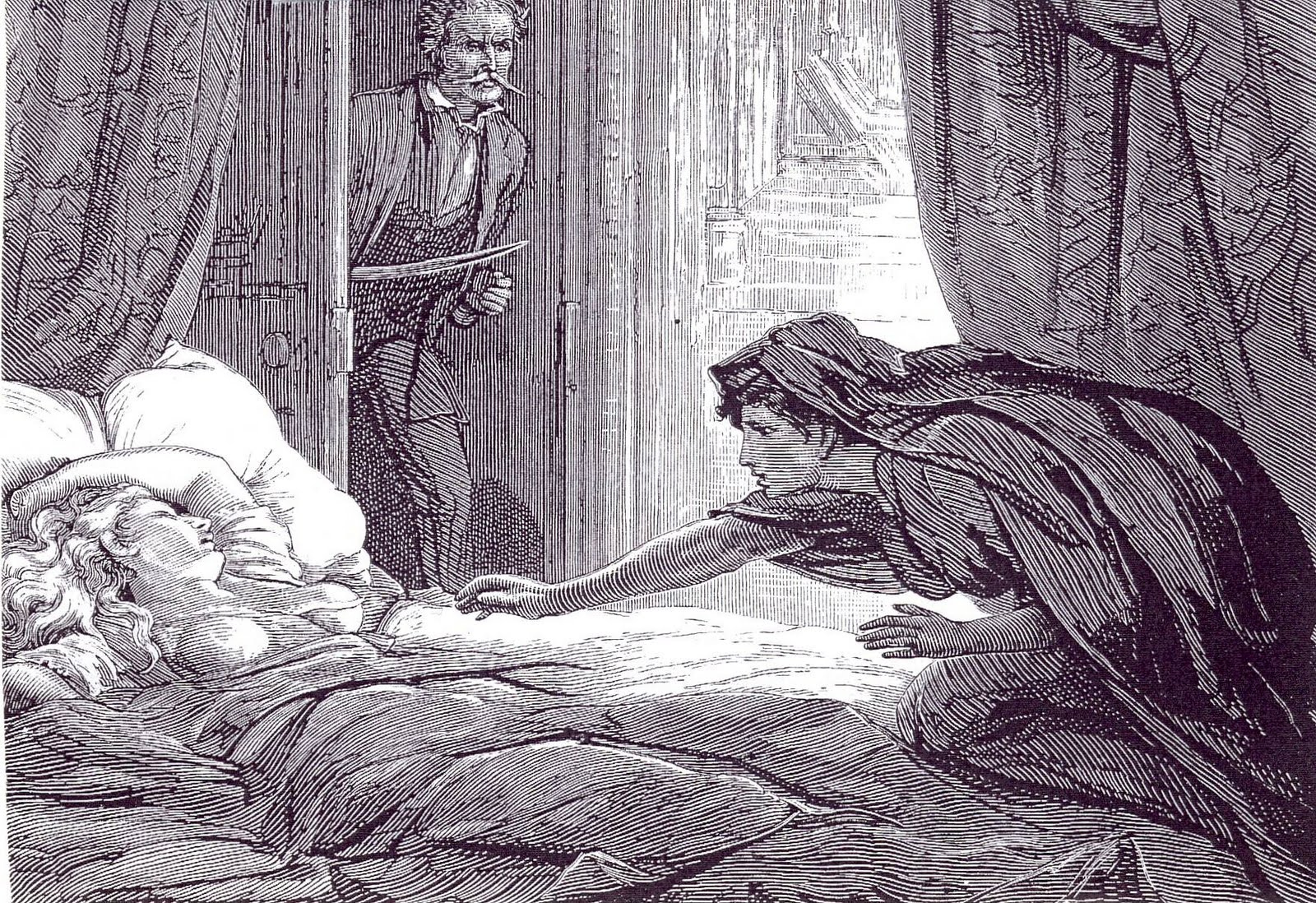
The image of a skeletal cadaverous hand, poking, almost in defilement, from freshly stirred earth has forever been seared in our darkest dreams. That very profound and phantasmal visual has haunted us, as a species, since our cave man days. To this very day the prominence of that icon is still quite alive in modern media. 
 That archetypical effigy has infected every artistic movement to date: from unforgettable movie posters, to quintessential novels, and/or epochal illustrations. The so called: ‘Evil Dead hand’, is a dormant representation that flings us back to the irrational worries of our more primitive ancestors. 

Following the same vein of Carl Jung’s archetypes, this archaic pattern has slowly been digested, regurgitated and, once again, processed into our collective unconscious. It has become one of the most autonomous, and hidden forms, that has emigrated from our dreams into physical manifestations.
Like the analytical psychotherapist’s popular figure of ‘The Shadow’, as a representation that embodies those dark desires we do not wish to identify ourself with, but nonetheless exist within us, this horrible motif speaks of our deep seeded fear of death; ‘The Shadow’ of nature. 

‘The Evil Dead hand’ epitomizes, not how we see ourselves, but, ultimately, how we see the world around us. And it all began, most likely, with one naive and ancient farmer raking the land over a mount of loose burial dirt. A cadaver, in mid rigor mortis, twitching up; his paralyzed hands searching for live. 
A construct that could easily remake and re-hatch itself, in a variety of ways, across the globe.
As such conjunction, superstition, folk tales and lack of scientific inquiry, mixed together in an orgy of constructive hunches, and gave birth to the undead fiction. 
Vampires, zombies, revenants, ghouls, Frankensteins, and wraiths, owe their parentage to this emblematic model. To this clear icon of one of our most staggering fears. 
We tremble before the dead, because, in the most fundamental way, they mirror a reality we can never escape; the overwhelming fact that we will die, rot and, whatever remains of us, fall into a vast well of assured uncertainty.
This, in a way, was what that long forgotten fore-bearer truly disturbed and dug-up; the truth of our very mortality.

Excerpt: The Wraith of The Obelisk- L.J. Gomez.

Unseen Buenos Aires- Lightning sometimes strikes twice-


“... ‘Lightning never strike twice... cause some place, two times just isn’t enough...’ 
Although never analyzed, and purely hypothesized as a concept, the idea that reality and primarily events constantly repeat themselves has been a standard philosophical theory since antiquity. The ‘Doctrine of Eternal Return’ or ‘Eternal Recurrences’ has been heavily studied, by not only modern theologians and physicists, but by archaic Pythagoreans and Stoics.
The concept was constantly address by such lofty minds as Arthur Schopenhauer, famed German philosopher, and, after it had fell into disuse in the modern world, by Friedrich Nietzsche.
Psychologists have even gone so far as to blame this phenomenon, of a cyclical and fluctuate span of time, as oppose to linear chrono frame, for the experience of ‘convergence’, ‘resonance’, or ‘deja-vu’.
Mark Twain, the american writer, was even quoted as saying: ‘A favorite theory of mine, to wit, that no occurrence is sole and solitary, but is merely a repetition of a thing which has happened before, and perhaps often’.
Some minds have even claimed that we ourselves, as a populace, are to blame for such revolving chains of causalities. They estimate that perhaps, even in a supernatural or unconscious level, we are destined to repeat, time after time, certain events that have been hammered into our spirit.
Argentina is no exception to the rule. The country has had to suffer, almost every 10-12 years, periodical loops of geo-political and economical turmoils, and endless rotation of interminably failed  social plans. They, as a society, are not limited in a macro-cosmological sense to such upheavals, but instead are also pawns, as individual, to a microscopic repetitions of their daily routines. In a way they are constant marionettes to a controlled chaos system, were chance and entropy are only ideas that blossom in forgetful minds.
They must endure calamities and tragedies on a ceaseless, and tiresome, thread of reruns; from the continued dangers of riots and looting, that occur on a yearly basis right around Christmas time, to the manifest indifference of a government, that talks a big game on the necessary obligations it must fulfill to improve the train’s infrastructure but, that is notably absent, every 6 to 8 months, whenever a derailment or fatal accident occurs.
They most wade through the elliptical and repetitious allegations of corporate greed and political corruption, all the while knowing that no guilty party will ever be brought to justice. They must live through these strings of eternity, over and over again, remarkably aware, but somehow forgetful, of the fact that this has happened before and will happen again.
A clear example is the uproar and outcry warranted by the ‘República de Cromañon’ tragedy. With a death toll of 194 bodies, and at least 1400 wounded, this popular discotheque went ablaze’ because of a series faulty safety regulations and illegitimate use of indoor pyrotechnics by the audience, during a rock concert. Since that horrible 30th of December, 2004, the rippling a effects have been widespread. Irregularities in building codes and safety procedures, in other such environments, have been enforced with an almost Gestapo like efficiency and brutality. Still, nevertheless, as the years wane-off, and absent-minded individuals allow that memory to slip, the same codes, that have been so rigorously upheld, little by little fall in disarray; housing capacities are exceeded, inflammable materials are once again used, emergency exits are flippantly being chained up, construction and habitation regulations are passed-over, all these misdemeanors are conducted under the diligent eyes of inspector and their well oiled palms. As time passes there is a beating realization, even though history seems to warm Argentina with such clear reminders as ‘The Lame Horse’ nightclub fire in Russia and ‘Kiss’ nightclub disaster in Brazil, that the cycle wishes to reemerge; the monster wishes to feed.

Ironically, if certain parapsychologist are to be believe, we as a species brew the necessary conditions for our sorrows and triumphs; the longer we dwell on old victories or bygone scars, the higher the possibility for a repeat. Strangely enough it is our very nature that compels us to scratch at sealed wounds and play with those hurtful and fetid thoughts; it is our macabre sense, of being seduced by that which might pain us, that will ultimately lead to our downfall.
 Buenos Aires is a city, like every other, in part devoted to tragedies. Huge shrines, memorials and commemorative statues single out a dark piece of its troubled past. Many tourist comment on this flowing atmosphere of sadness that some times flows, like the innumerable subways, below the pavement; like a river of grief through veins of steel. The ‘porteño’, the name given to people who live in the capital of Argentina, soaks in these woeful memories; on those dark chapters of their shared history. Yearly, in Argentina, more psychologist and psychiatrist graduate than in any other profession; such is societies need for their service.
Some visitors to this magnificent city qualify, and give that morose melancholy that shadows their host’s spirit, a whimsical name: ‘alma de tango’ or  ‘tangoed soul’. 
All the while the pot is stirred and the meal reheated; all those dark occurrences and memoirs rising up from the ground, livid to repeat history, over and over again.

Excerpt: The Wraith of The Obelisk- L.J. Gomez.